
An enterprise user starts a multilingual audio or video call from Android, selects source and target languages, and sends an invite. Guests join through Android or a web link while the same source and translated captions reach everyone in the room. Chinese-English can use continuous automatic direction; other combinations follow the selected languages and available speech capability.
Why room-shared captions matter
Some meeting tools display translation locally for each participant. A room-shared workflow instead creates one caption source for the conversation, so participants see consistent source text and translation. This matters during product demonstrations, support calls and project coordination, where different versions of a figure or term can create avoidable confusion.
The host selects the language pair for the call. Chinese-English can follow the language spoken in each turn and switch direction continuously. English-French, Russian-English and other configured combinations follow their selected source and target route. Multilingual support does not mean unrestricted simultaneous language detection: a project still needs defined languages, orderly turn-taking and a clear output target.
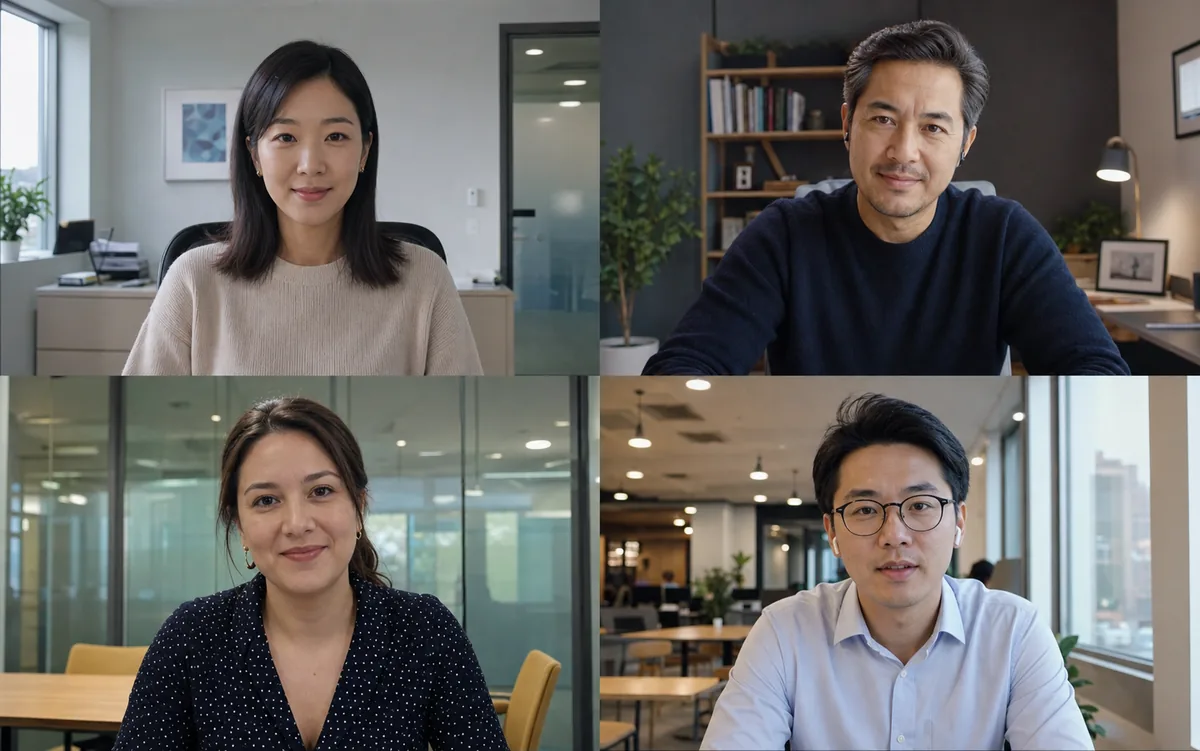
The call journey from invitation to shared captions
1. Select the language pair and create an invitation
The host selects source and target languages, then checks camera, microphone and network state before sharing the invitation. A first-time browser guest should be told that the browser will request media permission.
2. Join through Android or a browser
Browser joining reduces installation friction for a customer or supplier. Corporate policies, embedded mobile browsers and hidden device identifiers can still affect camera and microphone access, so an important call should be tested in advance.
3. Publish one room-level caption stream
Speech is transcribed and translated while stable segment identities keep updates together. One room-level caption producer avoids creating a separate recognition and translation chain for every participant.
4. Distinguish media problems from caption problems
Audio, video and captions do not share exactly the same transport path. A useful interface differentiates a frozen video, interrupted audio and delayed captions instead of presenting every issue as a generic connection problem.
Business use cases
- Cross-border sales and product demonstrations
- Customer requirement and project meetings
- Remote technical support and troubleshooting
- Supplier, delivery and after-sales coordination
- Short multilingual training sessions
- Distributed international team meetings
For a large audience, multiple target languages, venue displays or broadcast graphics, use a managed live event caption workflow.
Video calls, dual-screen terminals and event captions
| Option | Communication pattern | Primary output |
|---|---|---|
| Multilingual video call | Remote two-way business conversation | Original media plus room-shared translated captions |
| Dual-screen translator | Face-to-face reception, exhibition or service counter | Short translated turns on two physical displays |
| Live event captions | Speakers addressing a larger audience | Continuous captions for screens, broadcast and mobile viewers |
Before an important cross-border call
- Test the invitation and browser permissions
- Prepare product names, models and terminology
- Use a headset to reduce echo and noise
- Take clear turns rather than speaking over each other
- Confirm key numbers and dates in writing
- Keep chat or email as a fallback route
Important delivery dates, prices, payment terms and legal statements should be confirmed in writing after the call. High-risk communication may require professional human interpreting or review.
Permissions and data expectations
Before using audio and video, organisations should define participant consent, recording policy, caption retention and export requirements. Browser media access should follow an explicit user action, while the project scope should state whether call recordings or captions are retained.
Frequently asked questions
Do both participants need an app?
Not necessarily. An enterprise user can start from Android and invite a guest through Android or a browser link.
Do all language pairs detect direction automatically?
No. Chinese-English can use continuous automatic language direction; other combinations and auto-detection behaviour depend on the selected languages and available speech capability.
Can this replace interpretation for a large conference?
It is best for controlled two-way communication. Large events need screen, broadcast, audience, rehearsal and operational planning.
Editorial note: This guide reflects the current WALI multilingual call workflow and common cross-border business scenarios. Available language pairs, auto-detection behaviour, participation methods and data handling depend on the agreed project configuration.