
Confirm clean audio and the correct source language, select a concise domain instruction, then collect the final agenda, speaker names, organisations, approved brand translations, product models, abbreviations, units and prohibited legacy terms. Classify them as recognition terms, approved translations, fixed replacements or operator watch items, then test representative speech.
Five quality layers serve different purposes
| Layer | Purpose | Example |
|---|---|---|
| Audio and source language | Give translation a reliable transcript | Levels, noise, language direction |
| Recognition term | Improve source transcription | Rare names, models, abbreviations |
| Industry context and translation term | Constrain context and target form | Domain concepts, official organisation name |
| Fixed replacement | Correct predictable formatting | Brand capitalisation |
| Operator watch item | Flag high-impact content | Amounts, dates, contract language |
How industry templates support specialist translation
WALI currently provides 27 industry and specialist templates with more than 5,000 Chinese-English term pairs. They cover manufacturing, finance, energy, construction, research, education, artificial intelligence, semiconductors, clinical medicine and other domains. General industry templates contain 100–200 high-value terms, while specialist medicine and AI templates go deeper. Templates provide a starting point; a production event should still add its own approved material rather than inject an entire unrelated dictionary into every sentence.
| Domain example | Instruction focus | Potentially ambiguous terms |
|---|---|---|
| AI and machine learning | Separate training, inference, evaluation and safety | agent / model, token / embedding |
| Clinical medicine and pharmacy | Preserve dosage, route and diagnostic boundaries | sign / symptom, severity / seriousness |
| Finance, securities and accounting | Preserve currency, basis points and measurement basis | clearing / settlement, recognition / derecognition |
| Manufacturing and semiconductors | Preserve process, model, parameter and unit | die / chip / package, yield / defect density |
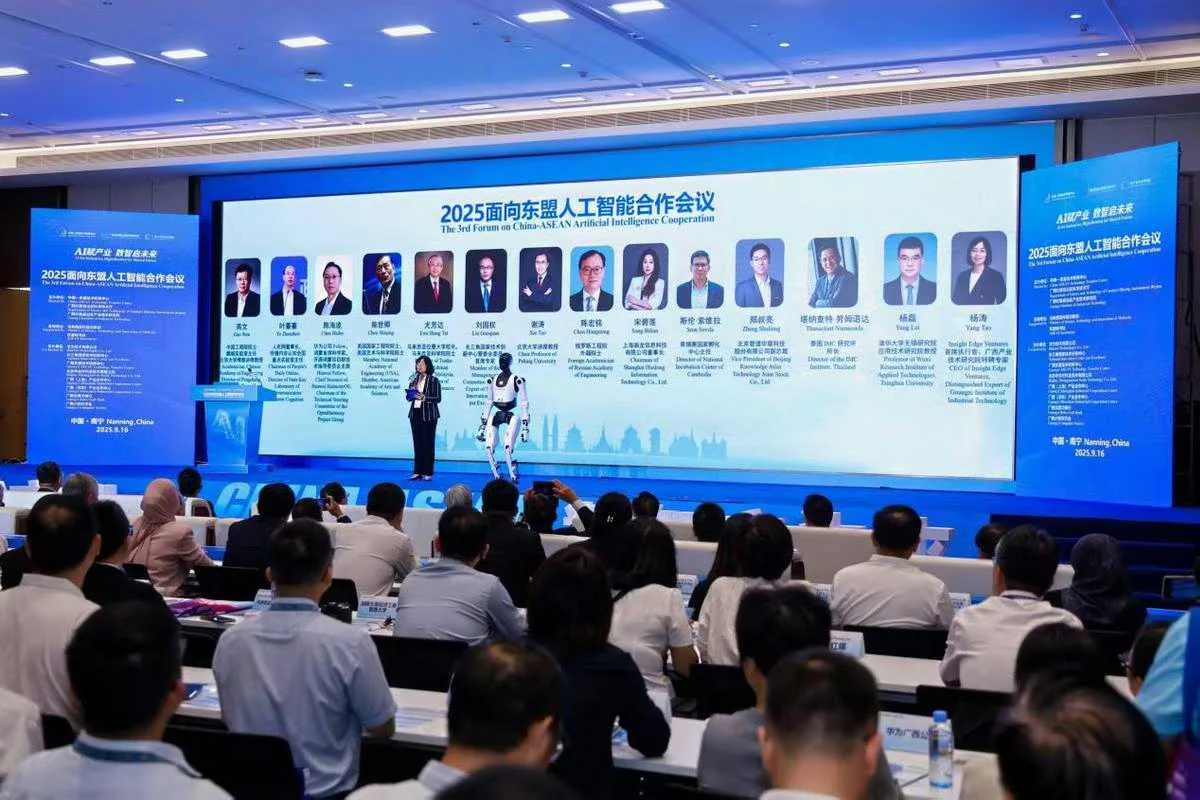
What organisers should provide
- Final agenda and language for each session
- Speaker names, roles and organisations
- Slides, scripts or detailed outlines
- Brands, products, technologies and model numbers
- Abbreviations and their full forms
- Rules for amounts, dates and units
- Pronunciation guidance for unusual names
- Terms that must not be published
Prioritise impact and frequency
First address words that would create an identity, brand or factual error. Then cover high-frequency specialist terms. Low-frequency background vocabulary comes later. A focused, verified list is more useful than thousands of loosely related entries.
From source files to live configuration
- Remove duplicates and confirm one authoritative form.
- Label source language, target language and context.
- Separate recognition and translation functions.
- Test representative real or similar audio.
- Flag names, figures and commitments for operator attention.
- Freeze a rehearsed version and record late changes.
Acceptance should be evidence-based
Sample an opening, product section, number-heavy passage and Q&A. Review source transcription, translation consistency, capitalisation, punctuation and caption length. Add manual correction plans for items that do not remain stable across accents or pronunciations.
Common mistakes
- Using an unapproved machine translation as the official name
- Keeping several forms for one organisation
- Providing spelling without pronunciation
- Sending all slides on event day
- Ignoring how long terms fit on screen
- Treating a glossary as an accuracy guarantee
Frequently asked questions
Is a larger glossary always better?
No. Relevance, correctness, uniqueness and testing matter more than volume.
When should files be supplied?
As early as the project schedule allows. Late changes can be added, but they reduce testing and rehearsal time.
Editorial note: terminology preparation reduces predictable errors but results still depend on audio, accent, speed, language and venue noise. Medical, legal, financial and other high-impact content requires appropriately qualified human review.